💡 Heads Up: This article is approximately 1,300 words and designed as a comprehensive educational guide. You may find it helpful to bookmark this page and return to it in stages which will make it easier to understand and integrate into your health routine.
Celery juice is valued for its ability to support hydration, improve blood circulation, and help regulate inflammatory processes within the body. Naturally low in sugar and rich in flavonoids such as apigenin and luteolin, as well as compounds known as phthalides, it also provides natural electrolytes including potassium and sodium. Together, these compounds support fluid balance, digestive function, and vascular health.
Unlike fruit juices that primarily deliver carbohydrates, celery juice delivers bioactive compounds that help relax blood vessel walls, maintain healthy vascular tone, and influence inflammatory signalling pathways. For this reason, celery juice is commonly included in juicing recipes designed to support digestion, circulation, and hydration during structured cleansing phases.
During a structured juice cleanse, maintaining electrolyte balance remains important. Reduced caloric and carbohydrate intake lowers insulin levels, which naturally increases sodium and water excretion through the kidneys. For many individuals, this supports healthy blood pressure regulation. However, as the body adjusts, ensuring adequate electrolyte intake (which celery juice provides) helps maintain stable energy and comfort during this transition.
When celery is used regularly, extraction quality becomes increasingly important — making it essential to choose the best juicer for daily use.
Table of Contents
Celery Juice: Blood Circulation & Blood Pressure
Celery Juice and Fluid Balance
Celery Juice and Inflammation Modulation
Celery Juice and Digestive Support
Celery Juice in a Structured Body Cleanse
A Historical Note: Celery in Traditional Medicine
When Should You Be Cautious with Celery Juice?
The Phytonutrients in Celery
Celery contains several bioactive phytonutrients — plant compounds that contribute to its physiological effects. The most studied include flavonoids such as apigenin and luteolin, as well as aromatic compounds known as phthalides.
Apigenin
Apigenin is a flavonoid found in celery that exhibits antioxidant and anti-inflammatory activity. It helps regulate inflammatory signalling pathways within cells, including modulation of NF-κB. By influencing these pathways, apigenin contributes to vascular stability and cellular protection.
Luteolin
Luteolin is another flavonoid present in celery. It has demonstrated anti-inflammatory and antioxidant properties in experimental research and may support endothelial function — the health of the inner lining of blood vessels.
Phthalides
Phthalides are aromatic compounds characteristic of celery. These compounds are associated with relaxation of vascular smooth muscle, contributing to healthy blood flow and blood pressure regulation.
Natural Electrolytes
Although not phytonutrients, celery’s natural potassium and sodium content plays a key physiological role. These electrolytes regulate fluid distribution inside and outside cells, supporting hydration, nerve signalling, and muscular function.

Celery Juice: Blood Circulation & Blood Pressure
Celery’s influence on blood pressure is linked primarily to its phthalide content and vascular-supportive flavonoids. As outlined above, these compounds contribute to relaxation of vascular smooth muscle and support improved circulation. This mechanism differs from nitrate-rich vegetables such as beetroot juice, which act primarily through nitric oxide production.
Clinical research on celery extract has demonstrated measurable reductions in blood pressure in hypertensive individuals. For example, a study published in the Journal of Medicinal Food reported reductions in systolic blood pressure among subjects using celery seed extract. While the overall effects are typically moderate, they are consistent with celery’s proposed vascular mechanisms.
Within structured cleansing protocols — including a 3-day juice fast — stable circulation and balanced blood pressure can help maintain energy levels and overall comfort during dietary adjustment.
Celery Juice and Fluid Balance
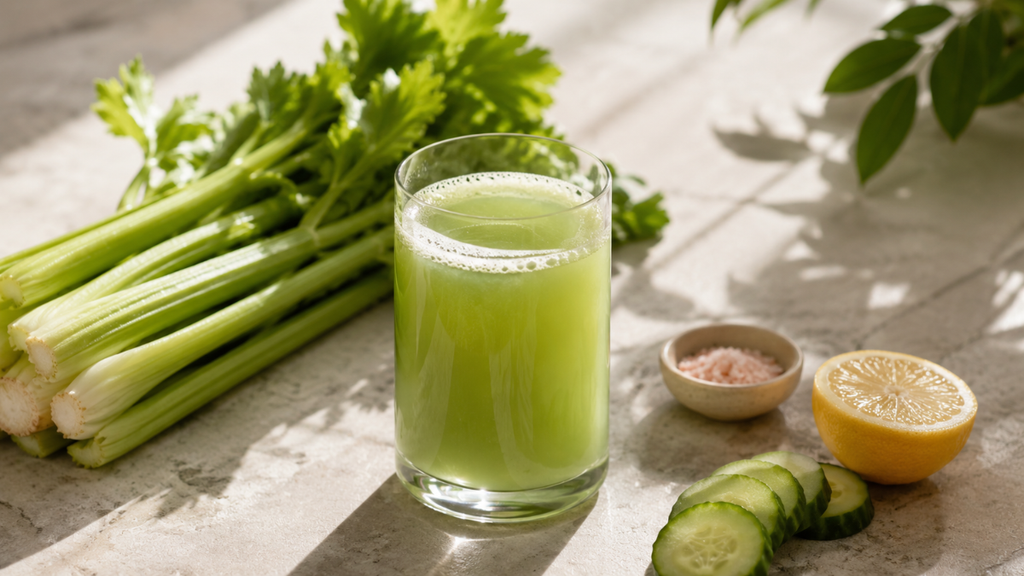
Fluid balance depends on the coordinated regulation of sodium and potassium across cell membranes. Sodium largely determines the volume of fluid in the bloodstream and surrounding tissues, while potassium is the primary intracellular electrolyte, helping regulate the fluid that resides within cells.
Celery juice provides both in modest amounts, helping maintain osmotic balance without the high sugar load associated with fruit juices. During a structured juice cleanse, where caloric intake is reduced, maintaining electrolyte stability becomes important for blood circulation and steady energy levels, as energy production inside cells (mitochondrial ATP generation) depends on stable ionic gradients maintained by electrolytes.
Celery also exhibits a mild diuretic effect. Rather than aggressively stimulating elimination, it may gently support the reduction of temporary fluid retention and assist natural fluid regulation.
Celery Juice and Inflammation Modulation
Inflammation is regulated by complex cellular signalling pathways. Flavonoids such as apigenin and luteolin help modulate these pathways by reducing the activity of pro-inflammatory mediators and supporting antioxidant defence mechanisms.
Persistent low-grade inflammation can interfere with glucose regulation and contribute to blood sugar instability. Chronic inflammatory signalling is now recognised as a driving factor in many long-term health conditions, including cardiovascular disease, metabolic dysfunction, and insulin resistance. For a deeper exploration of how vegetable juices support metabolic balance, see our guide to juicing to lower blood sugar.
Experimental studies have demonstrated that apigenin can suppress inflammatory cytokine production and reduce oxidative stress markers. These findings support celery juice’s role in contributing to antioxidant defence and inflammatory balance — particularly when combined with other flavonoid-rich ingredients in targeted juicing recipes.
Celery Juice and Digestive Support
Celery contains mild bitter phytochemicals that can stimulate digestive secretions. Bitter compounds trigger receptors on the tongue that signal the stomach and pancreas to increase gastric acid and digestive enzyme production, supporting more efficient breakdown of food.
Although celery is not a strong bile stimulant, its flavonoids and mild bitter profile may gently support digestive coordination and liver function. When combined with ingredients such as lemon juice or ginger juice, celery juice forms part of digestive-supportive blends commonly used in structured body cleansing protocols.
Celery Juice in a Structured Body Cleanse
Celery is a foundational ingredient in any juice detox and contributes the following:
- Natural electrolytes
- Mild circulatory support
- Anti-inflammatory flavonoids
- Digestive stimulation
During therapeutic fasting or a 3-day juice cleanse, maintaining hydration and mineral balance becomes especially important. Celery juice supports this process while remaining low in sugar and unlikely to disrupt blood glucose regulation.
Because celery is a fibrous vegetable, extraction quality matters. Using a slow juicer can help preserve delicate phytonutrients while improving juice yield and overall quality.
A Historical Note: Celery in Traditional Medicine
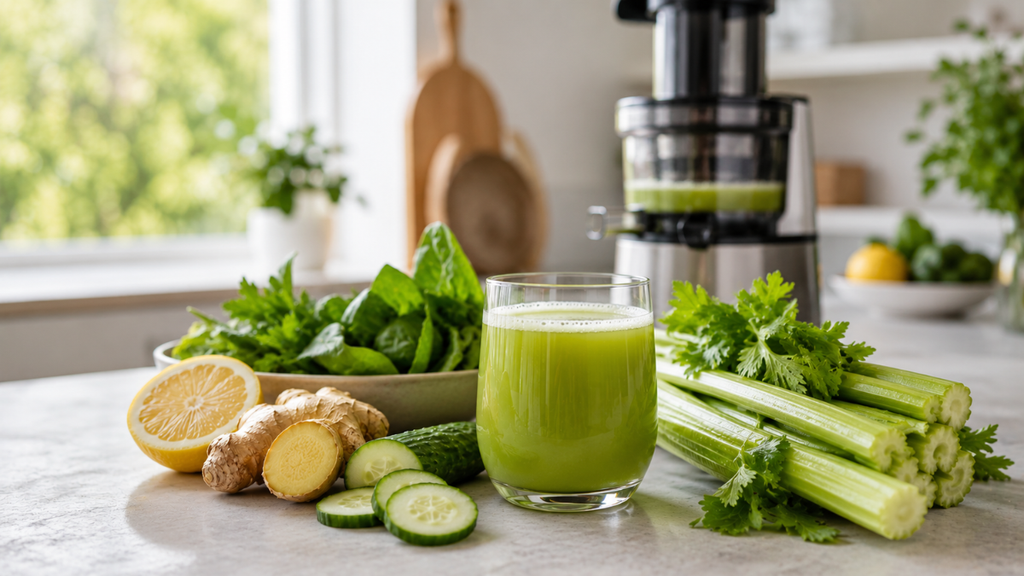
Celery has been cultivated for thousands of years. Ancient Egyptian, Greek, and Roman medical texts describe its use for digestive complaints, fluid imbalance, and circulatory concerns.
Other fruits and vegetables used historically for similar purposes include pomegranate, lemon, and ginger — many of which continue to be incorporated into modern vegetable juice protocols. For broader historical context, see our article on juicing in antiquity.
When Should You Be Cautious with Celery Juice?
Celery juice is generally well tolerated, but certain individuals should use it thoughtfully in specific situations:
Low Blood Pressure:
Because celery may support vascular relaxation, individuals with hypotension or those taking antihypertensive medication should monitor response.
Kidney Conditions:
Celery contains potassium. Individuals with impaired kidney function should moderate intake due to electrolyte considerations.
Allergy Sensitivity:
Celery allergy, while uncommon, can be significant in sensitive individuals.
Read Next
➡️ Juice Detox: A structured, multi-phase approach to cleansing that supports deeper, more sustainable results.
➡️ Juice Recipes: Juice formulae designed to support digestion, energy, and overall metabolic balance.
➡️ Phytonutrients: Understand how plant compounds influence inflammation, circulation, and cellular protection.
➡️ 3 Day Juice Cleanse: A protocol for resetting digestion and supporting the body through short-term fasting.
➡️ Juicing to Lower Blood Sugar: Learn how specific vegetables help regulate glucose and insulin response.
➡️ Beetroot Juice, Lemon Juice, Ginger Juice, Carrot Juice, Pomegranate Juice: Explore the unique properties and benefits of each ingredient in structured juicing protocols.

FAQs About Celery Juice
Does celery juice detox the liver?
Celery supports hydration and provides flavonoids that contribute to antioxidant defence, but detoxification is a complex, multi-system process best understood within the context of a structured body cleanse rather than through any single ingredient in isolation.
Is celery juice good for blood pressure?
Celery contains compounds associated with vascular relaxation and modest blood pressure support.
Can I drink celery juice every day?
Moderate daily intake is fine for most people.
Is celery juice good during a juice fast?
Yes. Its electrolyte content may support hydration during reduced caloric intake, particularly during a 3-day juice cleanse.
Disclaimer: This content is for informational and educational purposes only and is not intended to diagnose, treat or cure any disease. It is not a substitute for professional medical advice. Please consult a qualified healthcare professional before making significant changes to your health regimen. This article may contain affiliate links. As an Amazon Associate, Nature Heal may earn from qualifying purchases.