💡 Heads Up: This article is approximately 1,800 words and designed as a comprehensive educational guide. You may find it helpful to bookmark this page and return to it in stages, which can make it easier to understand and integrate into your health routine.
Lemon juice is one of the simplest and most widely used ingredients in juicing, yet it plays a valuable functional role in many juice combinations. It is naturally rich in vitamin C, a key antioxidant involved in immune defence, collagen formation, and cellular protection. It also contains citrus flavonoids such as hesperidin and eriocitrin, compounds associated with vascular health and inflammation regulation.
In addition to its phytonutrient content, lemon juice has practical effects on digestion. The sour taste stimulates sensory receptors in the mouth and stomach, helping to activate digestive reflexes. These signals encourage gastric secretions and prepare the digestive system for incoming food.
Although lemon juice tastes strongly acidic, the organic acids it contains — primarily citric acid — are metabolised in the body and converted into compounds that leave a mildly alkaline residue after digestion. For this reason, lemons are often described as “alkalising” foods. This has contributed to lemon’s long-standing use in traditional wellness practices, where diluted lemon water has often been consumed in the morning to support hydration and digestive activity.
During a structured juice cleanse, lemon juice is often added to vegetable juices to enhance flavour, contribute vitamin C and flavonoids, and improve palatability — particularly when vegetable juices form the primary source of nourishment.
In this guide, we’ll explore the key phytonutrients in lemon juice, how they influence digestion, hydration, and antioxidant activity, and how lemon fits into structured juicing and cleansing protocols.
Table of Contents
Key Phytonutrients in Lemon Juice
Lemon Juice and Digestive Stimulation
How Lemon Juice Supports Liver Function
The Historical Use of Lemon Juice
Key Phytonutrients in Lemon Juice
Lemon juice contains a range of biologically active compounds that contribute to its physiological effects. The most notable of these include vitamin C, citrus flavonoids, and citric acid. These compounds influence antioxidant defence, digestive activity, inflammatory regulation and metabolic processes that help maintain cellular health.
💡For a broader overview of the plant compounds found in fruits and vegetables, see our detailed guide to phytonutrients.
Vitamin C – Ascorbic Acid
Vitamin C is the dominant nutrient in lemon juice and one of the most important antioxidants in human physiology. It contributes to several critical processes:
- Neutralising Reactive Oxygen Species: These are unstable molecules produced during normal metabolism, exercise and exposure to environmental stress. In excess, they can damage proteins, fats and DNA. Vitamin C helps neutralise these molecules before they cause cellular damage.
- Collagen Synthesis: Collagen is the protein that gives strength and elasticity to skin, blood vessels, tendons and connective tissue. Vitamin C is required for the biochemical reactions that produce and maintain healthy collagen fibres.
- Immunity: Vitamin C helps several immune cells function properly, including white blood cells that detect and destroy pathogens. It also helps regulate inflammatory responses during infection.
- Iron Absorption: Vitamin C improves the absorption of non-haem iron, the type of iron found in plant foods, by converting it into a form that the intestine can absorb more efficiently.
Flavonoids – Hesperidin & Eriocitrin
Lemon juice contains citrus flavonoids, particularly hesperidin and eriocitrin. These compounds have been studied for their potential roles in:
- Vascular Integrity: Citrus flavonoids help maintain the strength and flexibility of blood vessel walls, supporting healthy circulation and helping vessels respond appropriately to changes in blood pressure.
- Regulate Inflammatory Signalling: Flavonoids influence chemical messengers in the body known as cytokines, which help regulate inflammation and immune responses.
- Antioxidant Defence: Flavonoids can neutralise free radicals and also support the body’s own antioxidant enzyme systems that protect cells from oxidative damage.
Flavonoids often work synergistically with vitamin C. Together they help stabilise blood vessels and protect tissues from oxidative damage.
Citric Acid
Citric acid is responsible for the sharp, sour taste of lemon juice. This plays several useful roles in digestion and may help:
- Digestion: The sour taste of citric acid activates taste receptors that signal the stomach and digestive glands to begin producing digestive juices. Because of this effect, lemon water is often taken in the morning to stimulate digestive reflexes.
- Mineral Absorption: Citric acid can bind to certain minerals such as calcium and magnesium, helping keep them soluble in the digestive tract so they can be absorbed more efficiently.
- Acid–Base Balance: Although citric acid tastes strongly acidic, it is metabolised in the body into compounds that can contribute to the body’s natural buffering systems that help maintain acid–base balance.

Lemon Juice and Digestive Stimulation
Lemon juice has long been associated with digestive support, largely because of its sharp, sour taste. Sour flavours activate sensory receptors that signal the digestive system to prepare for food, triggering increases in gastric secretions and digestive activity. In practical terms, small amounts of lemon juice may help:
- Stimulate appetite before meals
- Support gastric acidity, which plays an important role in breaking down food
- Encourage digestive readiness, particularly after periods of fasting or light eating
For individuals transitioning into a juice-based routine or structured body cleansing program, this mild digestive signalling can help the body adapt gradually as normal eating patterns change.
💡 When lemon juice is used regularly—particularly alongside fibrous vegetables — the method of extraction becomes more relevant — choosing the best juicer can help improve both efficiency and consistency.
How Lemon Juice Supports Liver Function
Lemon juice is sometimes described as a “liver detoxifier,” but this description is overly simplistic. The liver’s detoxification systems operate through biochemical pathways known as Phase I and Phase II detoxification, which convert potentially harmful compounds into forms that can be safely eliminated from the body.
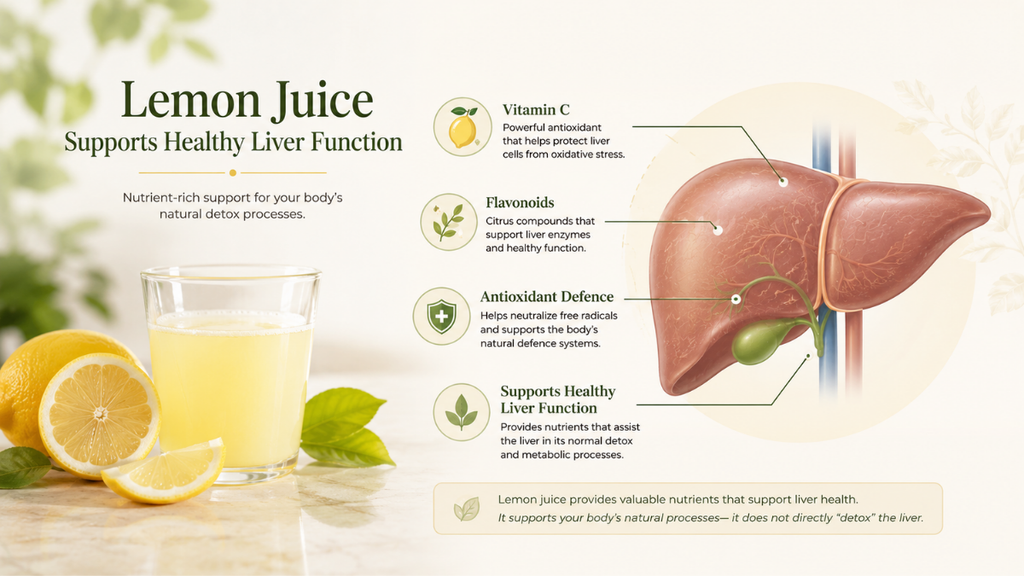
These reactions require enzymes, nutrients and antioxidant compounds to function efficiently. Lemon juice contributes indirectly by providing vitamin C and citrus flavonoids, which support antioxidant defence during these processes.
During Phase I detoxification, reactive intermediate molecules are produced as toxins are broken down. This stage can generate oxidative stress within liver cells. Antioxidant compounds such as vitamin C and flavonoids help buffer this oxidative load and support the liver’s normal protective mechanisms.
These nutrients may therefore help:
- Reduce oxidative stress generated during detoxification: Detoxification reactions produce reactive oxygen molecules as by-products, and antioxidant nutrients such as vitamin C help neutralise these molecules before they damage liver cells.
- Support cellular protection: Antioxidants help protect liver cell membranes, proteins and DNA from oxidative damage that can occur during periods of increased metabolic activity.
- Maintain metabolic balance during cleansing protocols: By helping regulate oxidative stress and inflammatory signalling, antioxidant compounds support the liver’s ability to carry out its normal metabolic and detoxification functions.
Although lemon juice does not “cleanse” the liver directly, it contributes nutrients that help support the physiological environment required for healthy liver function.
The Historical Use of Lemon Juice
Lemons have a long history of medicinal and culinary use. One of the most famous historical applications of citrus fruits was the prevention of scurvy, a disease caused by vitamin C deficiency that once affected sailors during long sea voyages.
In the late 18th century, the British Royal Navy began issuing citrus juice to sailors after it was discovered that citrus fruits could prevent the disease. Lemons were initially used, although limes were later adopted because they were easier to source from British Caribbean colonies — a practice that led to British sailors being nicknamed “limeys”. This discovery became one of the earliest examples of nutritional science influencing public health policy.
Beyond maritime history, lemon has also appeared in many traditional wellness practices as a morning tonic used to stimulate digestion and support vitality. For a broader exploration of how fruit and vegetable juices were used therapeutically in ancient cultures, see our article on juicing in antiquity.
When Should You Be Cautious?
Lemon juice is safe for most people when consumed in moderate amounts. However, a few considerations are worth noting.
- Tooth enamel: Frequent exposure to acidic beverages can weaken tooth enamel over time. Drinking diluted lemon juice through a straw and rinsing with water afterward may help reduce this risk.
- Acid sensitivity: Some individuals with sensitive stomach lining may find concentrated lemon juice irritating.
- Gastroesophageal reflux (GERD): For individuals prone to reflux symptoms, acidic beverages may aggravate discomfort. Dilution and moderation may help minimise irritation.

Read More
➡️ Juice Detox: A structured approach supporting digestion, hydration, and metabolic balance.
➡️ Juice Recipes: Practical combinations that are put together to target specific aspects of health.
➡️ 3 Day Juice Cleanse: A short-term protocol designed to reset digestion and support metabolic balance.
➡️ Best Juicer: Learn how different juicing methods affect extraction efficiency.
➡️ Beetroot juice, celery juice, carrot juice, ginger juice and pomegranate juice: Explore how these ingredients work alongside lemon to support circulation, antioxidant activity, and metabolic balance within structured juicing protocols.

FAQs About Lemon Juice
Does lemon juice help digestion?
Lemon juice stimulates taste receptors that help activate digestive reflexes, encouraging gastric secretions and preparing the digestive system for food.
Is lemon juice good for the liver?
Lemon juice provides vitamin C and flavonoids that support antioxidant activity. While it does not “detox” the liver directly, it may contribute to an environment that supports optimal liver function.
Does lemon juice alkalise the body?
Although lemon juice is acidic in taste, its metabolic byproducts can have an alkalising effect after digestion. However, the body tightly regulates blood pH regardless of diet.
Can lemon juice damage tooth enamel?
Frequent exposure to acidic beverages may weaken enamel. Drinking through a straw and rinsing with water afterward can help reduce risk.
Is lemon juice safe during a juice cleanse?
Yes. Lemon is commonly added to vegetable juices to enhance flavour and stimulate digestion, particularly during the gut reset phase of a structured cleanse.
Can lemon juice worsen acid reflux?
Some individuals with sensitive stomach lining or reflux may find concentrated lemon juice irritating. Dilution and moderation are advised.
How much juice is in one lemon?
On average, a medium lemon produces about 2–3 tablespoons (30–45 ml) of juice. Juice yield can vary depending on the size of the fruit and the juicing method used. Rolling the lemon firmly on a countertop before cutting can help release more juice.
Disclaimer:
This content is for informational and educational purposes only and is not intended to diagnose, treat or cure any disease. It is not a substitute for professional medical advice. Please consult a qualified healthcare professional before making significant changes to your health regimen. This article may contain affiliate links. As an Amazon Associate, Nature Heal may earn from qualifying purchases.