Heads Up: This article is around 2,300 words long and packed with valuable educational content designed to enhance your health and wellbeing. We recommend bookmarking this page and reading it in manageable stages. By absorbing the information in smaller chunks, you’ll find it easier to understand and integrate into your lifestyle.
Psyllium husk has become one of the world’s most popular natural fibre supplements, and for good reason. Whether you’re looking to improve bowel regularity, support digestive health, manage cholesterol levels or simply increase your daily fibre intake, psyllium husk offers a simple yet effective solution backed by decades of research.
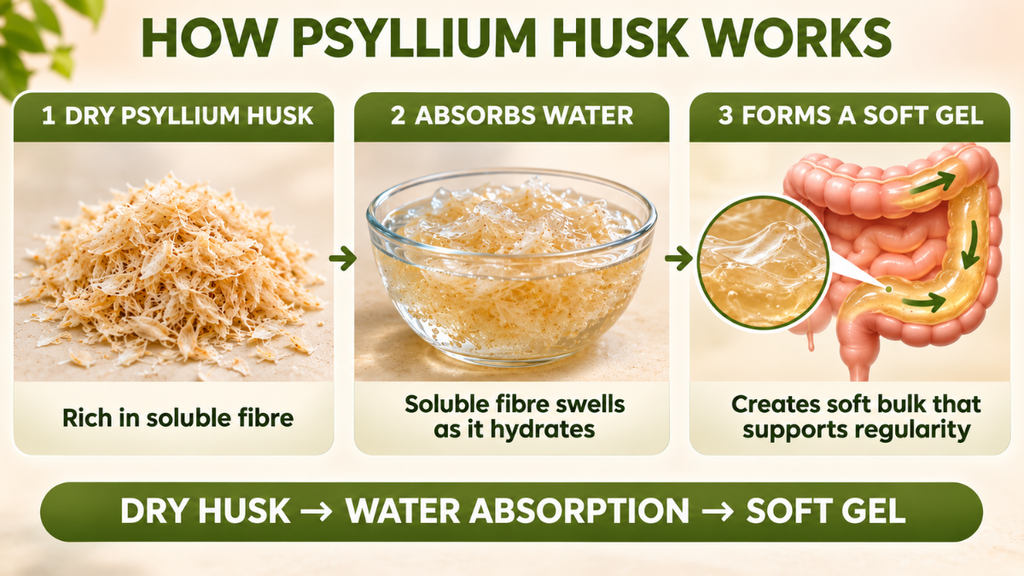
Derived from the seeds of the Plantago ovata plant, psyllium husk is rich in soluble fibre, allowing it to absorb water and form a soft, gel-like substance as it moves through the digestive tract. This unique property makes it beneficial for both constipation and mild diarrhoea, while also helping to nourish the beneficial bacteria that make up the gut microbiome.
At Nature Heal, psyllium husk also plays an important role within our three-step body cleansing system, where it is combined with bentonite clay during the bowel cleansing phase. If you’re interested in how psyllium husk fits into a structured detox programme, be sure to read our guide to Bentonite Clay & Psyllium Husk for gut cleansing.
In This Article
Where Does Psyllium Husk Come From?
Why Nature Heal Combines Psyllium Husk with Bentonite Clay
Psyllium Husk Powder vs Capsules
How Much Psyllium Husk Per Day?
Psyllium Husk: Frequently Asked Questions
What Is Psyllium Husk?
Psyllium husk is the outer coating of the seeds produced by Plantago ovata, a small shrub primarily cultivated in India. Unlike many fibre supplements, psyllium is exceptionally rich in soluble fibre, meaning it readily absorbs water.
When mixed with liquid, psyllium expands to form a soft gel that passes through the digestive tract. This gel helps to:
- Increase stool bulk
- Promote regular bowel movements
- Slow the absorption of sugars
- Bind bile acids within the intestine
- Provide nourishment for beneficial gut bacteria
Where Does Psyllium Husk Come From?
Psyllium has been used for centuries in traditional medicine across India and the Middle East. Today, India remains the world’s largest producer and exporter of psyllium, supplying the majority of the global market.
Modern healthcare professionals frequently recommend psyllium as a first-line fibre supplement due to its excellent safety profile and broad range of applications. Unlike stimulant laxatives, psyllium does not force the bowel to contract. Instead, it works with the body’s natural digestive processes by increasing water content and stool volume.
Psyllium Husk Benefits
Promotes Bowel Regularity
By absorbing water, psyllium softens the stool while simultaneously increasing its size. This combination encourages comfortable, regular bowel movements without creating dependence. For those with mild diarrhoea, the gel formed by psyllium can absorb excess water, helping improve stool consistency.
This balancing effect makes psyllium one of the most versatile natural fibre supplements available. If you have inflammatory bowel disease, difficulty swallowing, bowel obstruction or significant digestive symptoms, you should seek advice from your healthcare professional before using psyllium supplements.
Supports Healthy Cholesterol Levels
Research suggests that soluble fibre may help reduce LDL (“bad”) cholesterol by binding bile acids within the digestive tract. Because bile acids are produced using cholesterol, the body replaces those lost by drawing additional cholesterol from the bloodstream.
When combined with a healthy lifestyle, psyllium may therefore contribute to maintaining healthy cholesterol levels.
Helps Regulate Blood Sugar
Psyllium slows the digestion and absorption of carbohydrates, helping reduce sharp rises in blood glucose after meals. For individuals aiming to maintain healthy blood sugar control, increasing soluble fibre intake may form part of an overall healthy eating strategy.
Supports the Gut Microbiome
The gut microbiome contains trillions of microorganisms that influence digestion, immune function and overall health. Although psyllium is not as readily fermented as some other fibres, portions of it are utilised by beneficial bacteria within the colon.
These bacteria produce compounds known as short-chain fatty acids (SCFAs), which help support the intestinal lining and contribute to gut health.
Acts as a Prebiotic
A prebiotic is a type of fibre that feeds beneficial gut bacteria. While foods such as onions, garlic and asparagus contain naturally occurring prebiotics, psyllium also contributes fermentable fibre that supports microbial diversity. Maintaining a diverse microbiome has been associated with improved digestive resilience and overall health.

What Does the Research Say?
The evidence supporting psyllium husk extends far beyond digestive health. Numerous clinical trials have shown that regular psyllium supplementation may help improve bowel regularity, support healthy cholesterol levels, moderate post-meal blood sugar responses and contribute to overall metabolic health when consumed as part of a balanced diet.
Psyllium Husk and Cholesterol
One of the strongest pieces of evidence comes from a comprehensive meta-analysis published in the American Journal of Clinical Nutrition. Brown L, Rosner B, Willett WW & Sacks FM (1999) analysed the results of 67 controlled clinical trials investigating the cholesterol-lowering effects of dietary fibre.
Their findings showed that soluble fibres, including psyllium husk, produced statistically significant reductions in:
- LDL (“bad”) cholesterol
- Total cholesterol
without lowering HDL (“good”) cholesterol. Typical reductions in LDL cholesterol were around 5–10%, depending on the dose of psyllium consumed and participants’ starting cholesterol levels. Today, this remains one of the landmark analyses supporting the use of soluble fibre for maintaining healthy cholesterol levels.
Psyllium Husk and Blood Sugar
One of the strongest pieces of evidence supporting psyllium’s role in blood sugar regulation comes from a comprehensive review published in Nutrition Today. Gibb RD and McRorie JW Jr. (2020) reviewed the clinical evidence examining psyllium’s effects on glycaemic control and concluded that psyllium is one of the few isolated fibres with consistently demonstrated metabolic benefits.
Their review found that psyllium supplementation may help to:
- Slow carbohydrate absorption
- Reduce post-meal blood glucose spikes
- Improve overall glycaemic control
These effects occur because psyllium forms a viscous gel within the digestive tract, slowing the rate at which carbohydrates are digested and glucose enters the bloodstream. This helps produce a more gradual rise in blood sugar after meals and may improve long-term blood glucose control when consumed regularly as part of a healthy diet.
Why Nature Heal Combines Psyllium Husk with Bentonite Clay
Although psyllium husk offers many benefits on its own, at Nature Heal we use it in phase II of the gut cleansing phase within our three-step body cleansing programmes. Rather than relying on a single product, Phase 1 combines four carefully structured stages:
- Cold Pressed Castor Oil is used first as a gentle bowel purgation to begin clearing accumulated waste from the digestive tract.
- Bentonite Clay & Psyllium Husk are then used together, with the clay helping to bind substances within the intestine while psyllium husk provides bulk and supports their natural elimination.
- A Salt Water Cleanse (Shankhaprakshalana) follows to further cleanse the digestive tract.
- Finally, the gut is repopulated with beneficial bacteria using prebiotics and probiotics, helping to support a healthy gut microbiome after body cleansing.
Once the gut cleanse (Phase 1) is complete, we transition into Phase 2 which is a liver detox. Only once these foundations have been established do our clients progress to Phase 3, where they complete either a juice fast or water fast. To understand how each of these three phases work together, read our detailed guide to on how to detox your body.
Psyllium Husk Powder vs Capsules
Psyllium is commonly available in two forms.
| Powder | Capsules |
| Usually more economical | Convenient when travelling |
| Easy to adjust dosage | Pre-measured servings |
| Can be mixed into smoothies or water | No mixing required |
| Requires immediate consumption after mixing | Often requires several capsules to achieve an effective dose |
For most people, psyllium husk powder offers greater flexibility and represents the better value option.
💡If you’re looking for a practical guide to completing a full body cleanse at home, our dedicated resource explains how you can follow a structured detox programme from the comfort of your own home—without the need to attend an expensive wellness retreat or clinic.
How to Take Psyllium Husk
The best time to take psyllium husk depends on why you’re using it – timing and frequency may vary depending on your health goal.
For Constipation
Psyllium is most commonly taken once or twice daily. Many people find it helpful to take:
- Once in the morning
- Or, morning and evening if additional fibre is needed
Begin with a small serving and increase gradually over several days to minimise bloating or gas. Always follow with an additional glass of water.
For Diarrhoea
Although it may seem surprising, psyllium can also help manage diarrhoea by absorbing excess water in the bowel and improving stool consistency. It is generally taken:
- Once or twice daily
- Preferably between meals
Adequate hydration remains important, even though psyllium absorbs water within the intestine.
For Healthy Cholesterol Levels
Clinical studies investigating cholesterol reduction have typically used psyllium two to three times daily alongside meals. Taking psyllium immediately before or with meals helps soluble fibre mix with food in the digestive tract, allowing it to bind bile acids more effectively and support healthy cholesterol metabolism.
Because cholesterol reduction develops gradually, benefits are usually seen after several weeks of consistent daily use.
For Healthy Blood Sugar Levels
When used to support healthy blood glucose control, psyllium is generally taken shortly before meals containing carbohydrates. Research suggests that taking psyllium approximately 15–30 minutes before eating allows it to form a viscous gel within the stomach and small intestine.
This slows gastric emptying and carbohydrate absorption, helping to reduce the rise in blood sugar after meals. For individuals aiming to support blood sugar regulation throughout the day, psyllium is commonly taken before one to three meals, depending on dietary habits and professional advice.
General Guidelines
Regardless of the reason for taking psyllium husk:
- Start with a small serving and increase gradually
- Mix thoroughly with a large glass of water
- Drink immediately before it thickens
- Follow with another full glass of water
- Maintain adequate hydration throughout the day
- Take medications at least 2 hours before or after psyllium, as the fibre may reduce the absorption of some medicines
How Much Psyllium Husk Per Day?
There is no single dosage suitable for everyone. A sensible approach is to:
- Start with a small amount
- Assess how your digestive system responds
- Increase gradually if appropriate
- Ensure adequate fluid intake.
Increasing fibre intake too quickly may contribute to temporary bloating or abdominal discomfort. Gradual introduction generally produces the most comfortable results.
Side Effects and Precautions
Psyllium is considered safe for most healthy adults when taken correctly. Possible side effects may include:
- Temporary bloating
- Excess gas
- Abdominal fullness
- Mild cramping if introduced too quickly.
It is also advisable to separate psyllium from medications by at least a couple of hours, as fibre may reduce the absorption of certain medicines.
Final Thoughts
Psyllium husk is one of the most extensively used natural fibre supplements available today. Its ability to support bowel regularity, digestive health, healthy cholesterol levels, blood sugar management and the gut microbiome, makes it a valuable addition to many people’s daily routine.
Whether your goal is simply increasing fibre intake or learning how psyllium fits into a structured body cleansing programme, understanding how this remarkable plant works allows you to make informed decisions about your digestive health.
Whether your goal is simply increasing fibre intake or learning how psyllium fits into a structured body cleansing programme, understanding how this remarkable plant works allows you to make informed decisions about your digestive health. If you’d like to see how psyllium fits into a complete naturopathic detox programme, read our comprehensive guide on How to Detox Your Body.
Read Next
➡️ Bentonite Clay: Discover how bentonite clay complements psyllium husk during gut cleansing.
➡️ Bentonite Clay & Psyllium Husk: Learn why these two ingredients are used together for gut cleansing.
➡️ Organic Castor Oil: Discover why castor oil is used before bentonite clay and psyllium husk.
➡️ Salt and Water Cleanse: Learn how a salt water cleanse helps flush the digestive tract.
➡️ How to Detox Your Liver: Discover why liver detoxification follows gut cleansing.
➡️ How to Detox Your Body: Explore Nature Heal’s complete three-step body cleansing system.
➡️ Full Body Cleanse Detox at Home: Learn how to complete a structured body cleanse at home.

Psyllium Husk: Frequently Asked Questions
Can I take psyllium husk every day?
Many people use psyllium daily as part of a fibre-rich diet. As with any supplement, it should be used alongside adequate hydration and a balanced diet.
Can psyllium husk help with weight management?
Because psyllium absorbs water and increases feelings of fullness, it may help reduce appetite between meals. However, it should not be viewed as a standalone weight-loss solution.
Does psyllium help IBS?
Some individuals with irritable bowel syndrome (IBS) find soluble fibre such as psyllium beneficial, although responses vary. If you have IBS, it’s advisable to introduce psyllium gradually and discuss dietary changes with a healthcare professional.
Can psyllium husk be taken with probiotics?
Yes. Psyllium provides fermentable fibre that may complement probiotic supplementation by helping nourish beneficial bacteria already present in the gut.