💡 Heads Up: This article is approximately 1,800 words and designed as a comprehensive educational guide. You may find it helpful to bookmark this page and return to it in stages, making the information easier to understand and integrate into your health routine.
Carrot juice is one of the most widely used vegetable juices in natural health traditions. Its vibrant orange colour reflects a dense concentration of carotenoids — powerful plant compounds that play an important role in antioxidant defence and cellular protection.
Fresh fruit and vegetable juices provide a nutrient-dense and readily absorbed source of phytonutrients. The key phytonutrients in carrots include carotenoids such as beta-carotene and alpha-carotene, which contribute to their characteristic orange colour. Carrots are also commonly included in juicing recipes because of their balance of gentle sweetness.
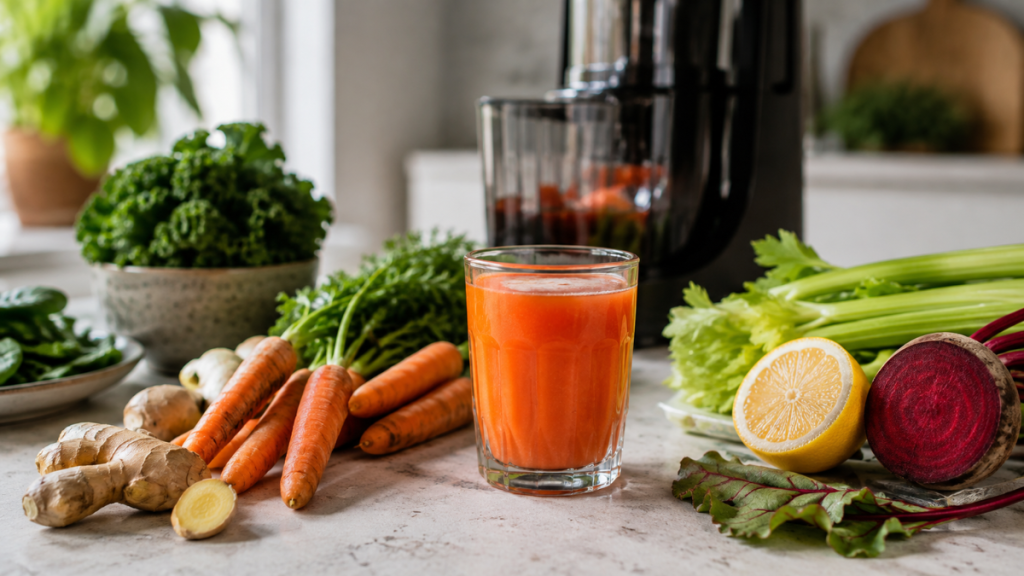
It is frequently used during a structured juice cleanse, where nutrient-rich fruit and vegetable juices are consumed for defined periods to support metabolic reset, digestive rest, and detoxification pathways. For example, it combines well with beetroot, celery, ginger, and lemon, helping create nutrient-dense detox drinks.
In this guide, we’ll explore the key phytonutrients found in carrots, how carrot juice supports antioxidant defence, and why it can play a valuable role in structured body cleansing protocols.
Table of Contents
Key Phytonutrients in Carrot Juice
Carrot Juice and Antioxidant Defence
Carrot Juice and Liver Function
A Historical Note: Carrots in Traditional Diets
When Should You Be Cautious with Carrot Juice?
Key Phytonutrients in Carrot Juice
Carrots contain a wide range of protective plant compounds that contribute to their health benefits. These compounds belong to a larger family of plant chemicals known as phytonutrients, which help protect plants from environmental stress while also providing biological benefits in the human body. Several phytonutrients are particularly abundant in carrots:
Beta-Carotene
Beta-carotene is the most well-known compound in carrots. It belongs to the carotenoid family of antioxidants and serves as a provitamin A, meaning the body can convert it into vitamin A when needed. Beta-carotene contributes to:
- Cellular Membrane Protection: Beta-carotene helps protect the outer membranes of cells from oxidative damage caused by free radicals.
- Immune Function: The body converts beta-carotene into vitamin A, which supports the normal function of immune cells that defend against infections.
- Skin and Mucosal Health: Vitamin A derived from beta-carotene helps maintain healthy skin and the protective linings of the lungs, digestive tract, and other tissues.
- Protection Against Oxidative Stress: As an antioxidant, beta-carotene helps neutralise unstable molecules that can damage cells and contribute to inflammation and ageing.
Alpha-Carotene
Alpha-carotene is another carotenoid found in carrots. Although it receives less attention than beta-carotene, emerging research has linked higher alpha-carotene intake with a lower risk of chronic diseases such as cardiovascular disease and certain cancers.
Like beta-carotene, alpha-carotene can also be converted into vitamin A in the body, contributing to normal immune function and tissue health. Researchers believe this may be partly due to its antioxidant activity, which helps protect cells from oxidative damage — a process that can gradually impair tissues and contribute to long-term disease development.
Lutein
Lutein is a carotenoid best known for its role in eye health. It accumulates in the retina, where it helps protect delicate visual tissues from oxidative stress and high-energy light exposure. When carrots are consumed regularly, lutein helps protect retinal cells from oxidative stress, supporting healthy visual function.
Polyacetylenes
Carrots also contain a unique group of compounds called polyacetylenes, including falcarinol. These compounds are currently being studied for their potential anti-inflammatory and protective properties. Although research is still developing, these compounds are thought to contribute to carrots’ anti-inflammatory and protective effects in the body.

Carrot Juice and Antioxidant Defence
One of the most important functions of carrot juice is its role in supporting the body’s antioxidant systems. Normal metabolism — the everyday processes that keep the body functioning — produces reactive oxygen species. These molecules are generated when cells produce energy, when toxins are metabolised in the liver, and when immune cells attack pathogens.
Carotenoids such as beta-carotene help counteract this by neutralising reactive oxygen molecules before they damage cells. This antioxidant activity may help:
- Protect Cellular Membranes: Carotenoids help shield the lipid membranes surrounding cells from oxidative damage caused by reactive oxygen molecules.
- Reduce Oxidative Stress: By neutralising reactive oxygen species, antioxidants help maintain the balance between normal metabolism and cellular damage.
- Support Immune Resilience: Antioxidants help protect immune cells from oxidative damage, allowing them to function more effectively during infection or inflammation.
During periods of dietary reset — such as a 3 day juice cleanse — antioxidant support may become particularly important. The liver detoxifies substances through a series of enzymatic processes known as Phase I and Phase II detoxification. Phase I reactions, which involve enzymes such as cytochrome P450, break down toxins into intermediate compounds that can temporarily increase the production of reactive oxygen species.
Carotenoids found in carrot juice may help support the body’s ability to manage the increased oxidative activity associated with detoxification processes that occur during a structured juice cleanse. Because carrots are relatively dense and rich in carotenoids, extraction method matters, and using a slow juicer can help improve yield while preserving key nutrients.
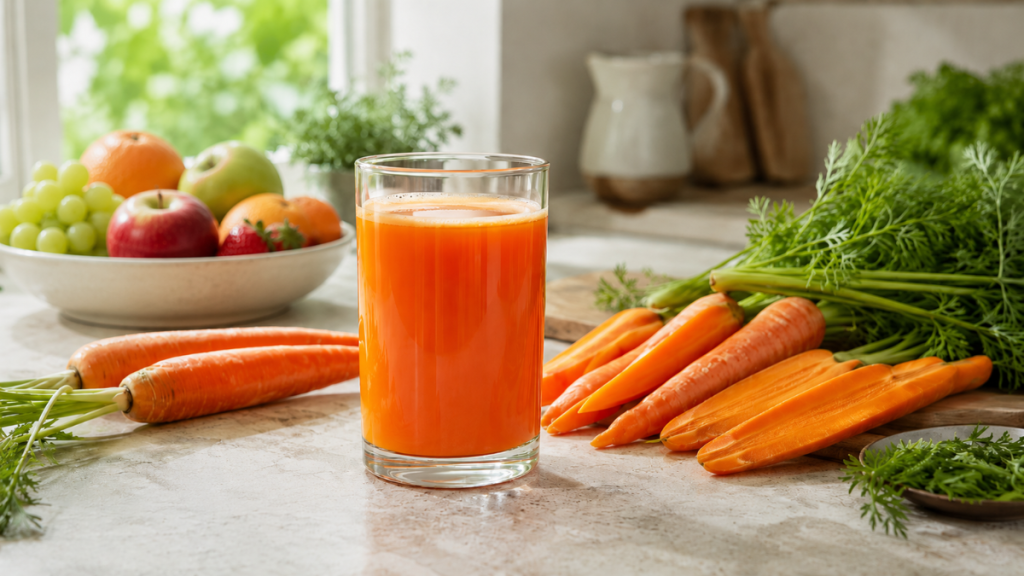
Carrot Juice and Eye Health
Carrot juice is famously associated with eye health due to its high beta-carotene content. Once consumed, beta-carotene can be converted into vitamin A, which plays a central role in vision. Vitamin A contributes to:
- Maintenance of retinal cells
- Healthy night vision
- Normal immune function in eye tissues
- Protection against oxidative damage in the retina
Lutein, another compound present in carrots, also contributes to visual health by supporting the macula — the region of the retina responsible for central vision. While carrot juice alone cannot prevent all eye conditions, its combination of carotenoids helps support the nutritional environment required for healthy visual function.
Carrot Juice and Liver Function
The liver plays a central role in detoxification and helps coordinate many of the body’s essential biochemical processes. Carotenoids such as beta-carotene are partially stored in liver tissue, where they may contribute to antioxidant buffering during metabolic processes:
- During Phase I liver detoxification, reactive molecules are produced while toxins and metabolic by-products are processed. Antioxidants help neutralise these molecules and maintain cellular stability.
Carrot juice may therefore support liver function indirectly by providing antioxidant nutrients and helping reduce oxidative stress during detoxification. Carotenoids may also support glutathione-dependent detoxification pathways — protective systems within liver cells that help neutralise toxins and prepare them for elimination.
This is one reason carrot juice often appears in protocols designed to support natural detoxification, including structured juice detox programs and body cleansing routines.
Carrot Juice and Skin Health
The same carotenoids that support eye health also contribute to healthy skin. Beta-carotene and related compounds help protect skin cells from oxidative stress caused by environmental factors such as UV exposure and pollution. Potential benefits of carotenoids for skin include:
- Protection of collagen structure
- Reduction of oxidative stress in skin tissues
- Support for healthy skin tone
- Maintenance of cellular resilience
Carotenoids can also accumulate in the skin over time, contributing to the subtle golden tone sometimes associated with diets rich in carotenoid-containing vegetables.
A Historical Note: Carrots in Traditional Diets
Carrots have been cultivated for thousands of years, with early varieties originating in the regions of modern-day Afghanistan and Central Asia. Unlike the bright orange carrots commonly seen today, many of these early carrots were purple, red, or yellow and were valued both as food and for their perceived medicinal qualities.
As carrots spread across Persia, the Mediterranean, and eventually Europe, they became an important part of traditional diets. Historical herbal texts and folk medicine often described carrots as foods that supported vitality, digestion, and visual health.
Carrots were also commonly used in vegetable broths and nourishing preparations intended to support recovery, digestion, and general strength. In many ways, modern vegetable juicing can be seen as a continuation of this long tradition of using plant foods in concentrated forms to support health.
Today, the discovery of carotenoids and other phytonutrients helps explain many of the benefits traditionally attributed to carrots in historical food cultures.
When Should You Be Cautious with Carrot Juice?
Although carrot juice offers many nutritional benefits, moderation is important:
- Natural sugar content: Carrot juice contains natural sugars. While levels are lower than most fruit juices, very large quantities may still raise blood glucose levels.
- Carotenemia: Excessive intake of carotenoid-rich foods can lead to carotenemia, a harmless condition where the skin develops a slight yellow-orange tint. This effect is temporary and resolves when carotenoid intake returns to normal levels.
Balanced vegetable juice formulations — particularly those built around leafy greens and bitter vegetables such as bitter gourd — tend to produce more stable metabolic responses and may help support healthy blood sugar regulation compared with juices made primarily from sweet vegetables.
Read Next
If you’d like to explore more topics related to juicing and body cleansing, these guides may also be helpful:
➡️ Juice Detox: A structured approach to fasting that supports antioxidant activity, liver function & metabolism.
➡️ Phytonutrients: Understand how plant compounds influence cellular protection & long-term health.
➡️ Juice Recipes: Targeted combinations designed to balance nutrient density with metabolic stability.
➡️ Best Juicer: Learn how different juicing methods affect extraction efficiency and nutrient preservation.
➡️ Juicing to Lower Blood Sugar: Discover how the right juice composition can help regulate glucose response.
➡️ Beetroot juice, celery juice, ginger juice and pomegranate juice: Explore how these ingredients complement carrot juice by supporting circulation, digestion, and antioxidant defence within structured protocols.

FAQs About Carrot Juice
Is carrot juice good for your eyes?
Carrot juice contains beta-carotene and alpha-carotene. The body converts both into vitamin A, which plays an essential role in maintaining normal retinal function and supporting night vision.
Is carrot juice high in sugar?
Carrot juice contains natural sugars, but less than most fruit juices. When used in moderation and combined with leafy greens or celery, this is generally not a concern.
Can carrot juice support liver function?
Carrot juice provides antioxidants such as beta-carotene that help buffer oxidative stress. During a cleanse, this may support the liver’s natural detoxification processes.
Is it safe to drink carrot juice every day?
Moderate daily intake is safe. Excessive consumption over time may cause carotenemia — a harmless yellow-orange tint to the skin due to elevated beta-carotene levels.
Does carrot juice help the skin?
Beta-carotene and other antioxidants help protect cells from oxidative stress, which may support overall skin tone and vitality.
When is the best time to drink carrot juice?
Carrot juice is commonly consumed in the morning or early afternoon. During a juice cleanse, it is often combined with other vegetable juices rather than consumed alone in large amounts.
Disclaimer: This content is for informational and educational purposes only and is not intended to diagnose, treat or cure any disease. It is not a substitute for professional medical advice. Please consult a qualified healthcare professional before making significant changes to your health regimen. This article may contain affiliate links. As an Amazon Associate, Nature Heal may earn from qualifying purchases.